
|
|
|
 |
November 23, 2025 DNA saves patterns which are built upon for large scale evolution. Physiological patterns are saved in three forms. One is to use proteins to cover unused genes. To prevent them from mutating, mutations are excised and corrected. Two is to lightly set aside unused genes; so they can be used again if needed. And three is to leave areas of the chromosome highly active and prone to mutations, so new genes can be produced as needed. Animals evolved in the oceans, apparently as something like sponges, though some persons argue that jelly fish might have been the starting point for animals. Either way, they had no bones. Animal evolution began about 541 million years ago, when the "Cambrian explosion of life" occurred. Modern respiration had to evolve first for the purpose of producing a lot of ATP efficiently to allow animal motion to be produced. Eventually the boneless fish moved onto land and evolved into amphibians which acquired bones. The weight caused by gravity required bones. Then some of the bony amphibians moved back into the oceans and evolved into boney fish. Some boney fish moved back onto land and evolved into mammals, which was about 400 million years ago or earlier. The amphibians that did not move back into the oceans evolved into reptiles. Therefore, the difference between evolution of reptiles and mammals is very informative of how evolution works. When amphibians moved into the oceans and back out, it stripped proteins off much of their DNA allowing drastic evolution to occur as needed to evolve into mammals. But the amphibians that did not go back into the oceans maintained protein cover over much of their DNA preventing drastic evolution from occurring; so they evolved into reptiles. The evidence is two small bumps under the jaw bone of the front teeth of humans that can be felt with the tongue. Those two bumps are the remains of hooks used by boney fish to catch prey. The hooks reduced down to two bumps; and there was no selective advantage in reducing further. There has to be a selective advantage before evolution can occur. The second method of saving physiological patterns is shown with the morel mushroom. It reverts to an earlier evolutionary form as an anomaly, which shows an earlier pattern being saved in the DNA. The anomaly of the morel is flat surface growth, because the morel started as a yeast growing at the base of trees and reaching down into the soil to feed on bacteria. Therefore, the growth on a flat surface at the base of trees was saved in the DNA but no longer used when the morel took form as a mushroom coming up from the ground.
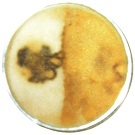
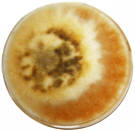
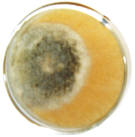
Under ideal conditions of mycelial growth on a flat surface, a rudimentary form of the morel takes form as tissue with pigments. The anomaly shows a previous state of growth being saved in the DNA and being activated later. The anomaly is a scramble of characteristics showing previous, unused genes mixing with modern genes. This effect is unusual but found with the morel, because it evolved very recently going from a filamentous yeast into a multicellular mushroom over the past 50 thousand years. It would have emerged from the ground about 20 thousand years ago. Evolution hot-spots occur on the DNA where a lot of rapid change is required. An example with the morel mushroom is the diversity of morphology that occurred over the recent 20 thousand years.
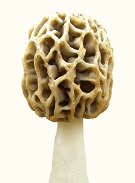
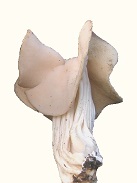
These two mushrooms evolved from the same source over the past 20 thousand years, which is extremely recent for a multicellular form to evolve from a single-celled organism—a yeast.
The usual morel evolved in early spring soil, where an abundance of bacteria exists to feed upon. Later in the year, when nutrients were scarce, conditions caused Helvella crispa to evolve. That's a lot of difference to evolve in a few short years. What the morel shows is that morphology can change easily; but physiology is highly resistant to change. That's because morphology requires little more than counting cells in different directions; but physiology is dependent upon crowded conditions in the cytoplasm, where anything out of place disrupts the processes. Normally, enzymes are attached to membranes which hold them in place in exactly the right position, so reactants can move from one enzyme to another without diffusing away and creating clutter. Diffusion is very slow and problematic for physiology. That's why modern respiration uses rotating proteins to move ADP into place and ATP out of the way. Diffusion would be very slow, while ATP had to be produced very rapidly and efficiently for animal motion.
|
 |
|
|||||||||||||||||||||||||||||||||||||
 |
 |
 | ||
 | ||||
 |
 |
 |
||